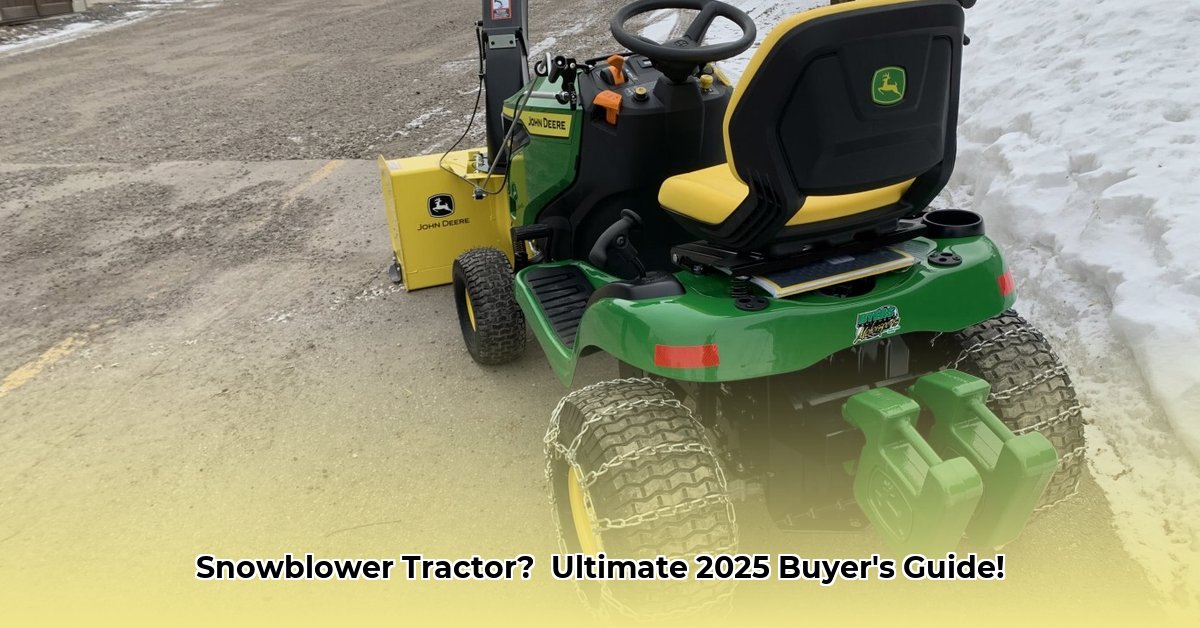
Tired of backbreaking snow shoveling? A lawn tractor with a snow blower attachment can transform your winter chores, saving you significant time and effort. This comprehensive guide will help you navigate the choices, ensuring you select the perfect snow-clearing solution for your needs and budget. We'll cover everything from choosing the right model to safe operation and maintenance, empowering you to conquer winter with ease. For more detailed information, check out this helpful guide.
Key Factors to Consider When Choosing a Snow Blower Attachment
Selecting the right snow blower attachment requires careful consideration of several key factors. Think of it like selecting the right tool for the job; a hammer won't work for screwing in a screw. These factors will ensure compatibility and optimal performance.
Tractor Compatibility: Power and Traction
Before considering specific snow blower models, ensure your lawn tractor meets the necessary requirements. This includes having sufficient PTO (Power Take-Off) horsepower — insufficient power will lead to poor performance and potential damage. Check your tractor's manual for its rated PTO horsepower. Four-wheel drive (4WD) is highly recommended, especially for steep inclines or deep, heavy snow, offering enhanced traction and control. Finally, confirm your tractor's weight capacity to ensure it can safely handle the additional weight of the snow blower attachment. Overloading can lead to serious damage.
Snow Blower Features: Auger Type, Clearing Width, and More
Snow blower features significantly affect their performance and suitability for various snow conditions. Understanding these features is crucial for informed decision-making.
Auger Type: The auger is the heart of the snow blower. Single-stage augers are suitable for light, fluffy snow. Dual-stage augers excel in heavier, wetter snow by first breaking up the snow before expelling it. Tri-stage augers, incorporating a third impeller stage, are the most powerful, tackling even the deepest and most packed snow.
Clearing Width: This refers to the width of snow cleared in a single pass. Wider clearing widths (measured in inches) translate into faster snow removal but require more powerful tractors. Consider the size of your driveway or area to be cleared.
Throwing Distance: The distance the snow is propelled dictates how far away the snow pile accumulates. Longer throwing distances reduce the frequency of directional adjustments, increasing efficiency.
Chute Control: Chute control mechanisms, available in manual or electric options, determine how easily you can direct the snow's trajectory. Electric chutes offer precise control from the tractor's seat, while manual chutes require more physical effort.
Material Construction: Durable materials are essential for longevity. Steel is robust but heavier, whereas high-density polyethylene (HDPE) offers lighter weight but may be less resistant to damage.
Budget: Initial Cost and Long-Term Maintenance
The cost of snow blower attachments varies considerably. Consider not only the initial purchase price but also the potential for future maintenance and repair costs. Higher-quality models, while more expensive upfront, often require less frequent repairs, potentially saving money in the long run. Factors influencing price include features, construction quality, and brand reputation.
Maintenance: Keeping Your Snow Blower Running Smoothly
Regular maintenance is crucial for extending the lifespan of your snow blower attachment and ensuring reliable performance. This includes:
Lubrication: Regular lubrication of moving parts is essential, preventing wear and tear. Consult your snow blower’s manual for specific lubrication points and recommended grease types.
Auger Inspection: Periodically inspect the auger for damage, wear, or debris buildup that could impede its function. Address any issues promptly.
Storage: Proper storage during the off-season is critical in preventing rust and corrosion. Clean the snow blower thoroughly and store it in a dry, indoor location.
Top Models Reviewed: A Comparative Analysis
We’ve compiled a comparison of several popular snow blower attachments, considering their features and suitability for various needs. Prices are estimates and should be verified with retailers.
| Model | Auger Type | Clearing Width (in) | Throwing Distance (ft) | Chute Control | Approximate Price Range ($) | Pros | Cons | Ideal For |
|---|---|---|---|---|---|---|---|---|
| Acme SnowBlaster 500 | Dual | 48 | 40 | Electric | $1000 - $1500 | Powerful, reliable, easy to use | More expensive | Homeowners with frequent heavy snowfall |
| Beta SnowPro 300 | Single | 36 | 30 | Manual | $700 - $1000 | Affordable, easy maintenance | Less powerful, suitable for light snow only | Homeowners with occasional light to moderate snowfall |
| Gamma SnowForce 700 | Tri-Stage | 60 | 50 | Electric | $1500 - $2000 | Handles deep snow effectively, excellent throwing distance | High initial cost, requires a powerful tractor | Larger properties, commercial snow removal |
Note: These are example models. Always conduct independent research to confirm specifications and pricing.
Installation and Use Guide: A Step-by-Step Process
Proper installation and safe operation are crucial for efficient snow removal and to prevent accidents. Always consult your tractor and snow blower manuals.
Preparation: Ensure the tractor's PTO is engaged before operation. Make certain the snow blower is securely attached and that all safety pins are in place.
Attachment: Carefully follow the manufacturer's instructions for attaching the snow blower to your tractor's PTO. Note any specific safety precautions.
Operation: Begin by operating at a slow speed to assess the blower's performance. Avoid jerky movements and sharp turns. Maintain a safe distance from obstacles and bystanders.
Troubleshooting: In the event of a clog, immediately disengage the PTO, and carefully clear the blockage before resuming operation.
Maintenance Tips: Ensuring Longevity
Regular maintenance ensures optimal performance and extends the lifespan of your snow blower attachment.
Lubrication: Regularly lubricate all moving parts, following the manufacturer's recommendations.
Auger Inspection: Carefully inspect the auger, clearing any debris and checking for wear and tear.
Storage: Store the snow blower in a dry, indoor location during the off-season to prevent corrosion.
Conclusion: Choosing the Right Snow Blower for Your Needs
Choosing the right snow blower attachment for your lawn tractor significantly impacts ease of use and efficiency. By carefully considering your budget, snow conditions, and tractor capabilities, you can select the model that best fits your needs, making winter snow removal less of a chore and more of a manageable task.